


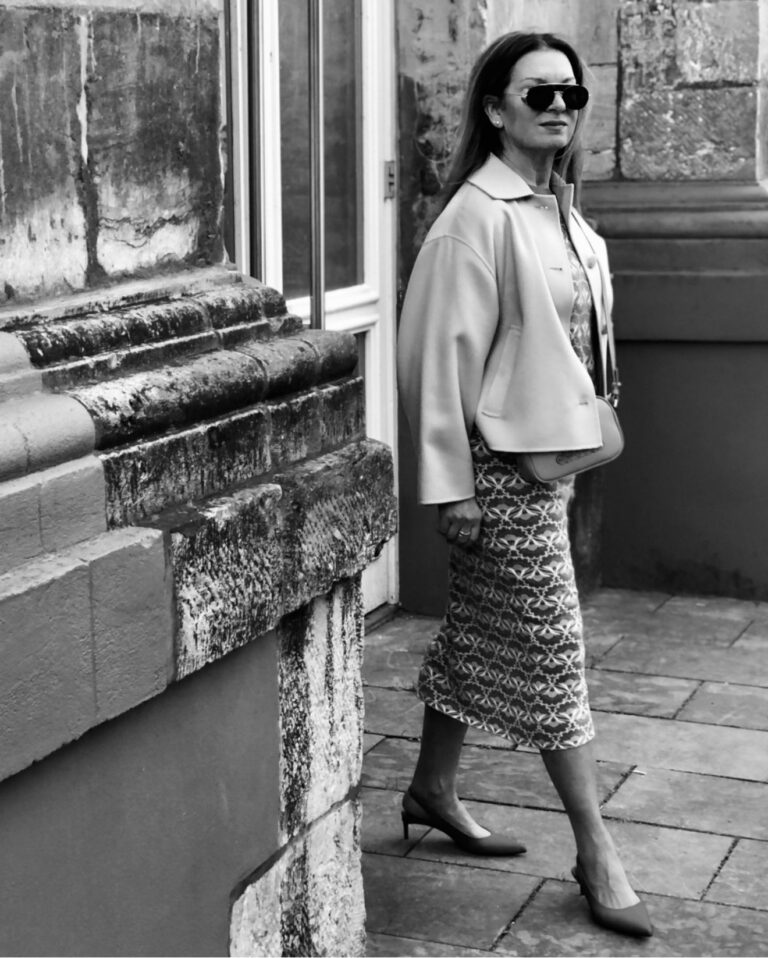
Max Mara · Bredestraat · Italian luxury · womenswear
Some garments become known by a name, others by a number. The 101801 belongs to the latter category. Anne-Marie Beretta designed this coat in 1981 for Max Mara; the model grew into one of the house’s most recognisable expressions. Anyone who wants to understand why a coat can be so much more than the last layer you put on will find a convincing starting point at Max Mara.
The 101801 is one chapter in a family of recognisable coats. Manuela tells another story: a wrap model of pure camel hair, with a generous shape and a characteristic quilted edge. The hair is gathered during the natural moulting season and carded during the spinning process. Details like these explain why material is part of the design at this house. The suppleness of the fibre helps determine how the coat falls around the body.
Then there is the Teddy Bear Coat, designed in 2013 with an archive piece from the eighties as its starting point. The generous volume, low sleeve insertion and fluffy surface make the model instantly recognisable. The camel version combines camel hair with a silk base. Within the same design world a very different character emerges: more playful and exuberant than the sleeker lines of the 101801. The history of Max Mara also consists of such new interpretations.
The Maastricht boutique brings the broader womenswear collection close. Besides coats there is attention to suits, dresses and eyewear. That lets you look beyond the iconic outerwear for which Max Mara is so well known. It is a coherent world in which a coat, trousers and top each have their own function. The shop is especially suited to anyone who likes to see different possibilities side by side within one design vision.
The boutique on the Bredestraat is getting a new look; during the renovation Max Mara receives customers temporarily at Havenstraat 8-12. The house’s fashion world thus remains present in the same compact shopping quarter. Weekend Max Mara also has a separate address at Maastrichter Smedenstraat 23. That related line forms a chapter of its own, with a different collection and its own shop in Maastricht.
Ludmilla shows a quieter side of the collection again. For this coat Max Mara uses double cashmere, hand-stitched and finished with tailoring details. The difference between Manuela, Teddy and Ludmilla therefore lies in more than a name or colour. Construction, volume and material lead to three different ways of wearing. Together they form a good way in for anyone who wants to get to know the house up close for the first time.
Max Mara thus brings a specific form of Italian fashion to Maastricht: wearable garments that carry a recognisable design history. The coats form the foundation; suits, dresses and accessories build on that. A visit is especially interesting if you like such a coherent signature. The outer layer gets the same attention here as the whole beneath it, and a design from 1981 can still be the beginning of a new wardrobe.
The coat may outlive the trend.
www.maxmara-maastricht.com