


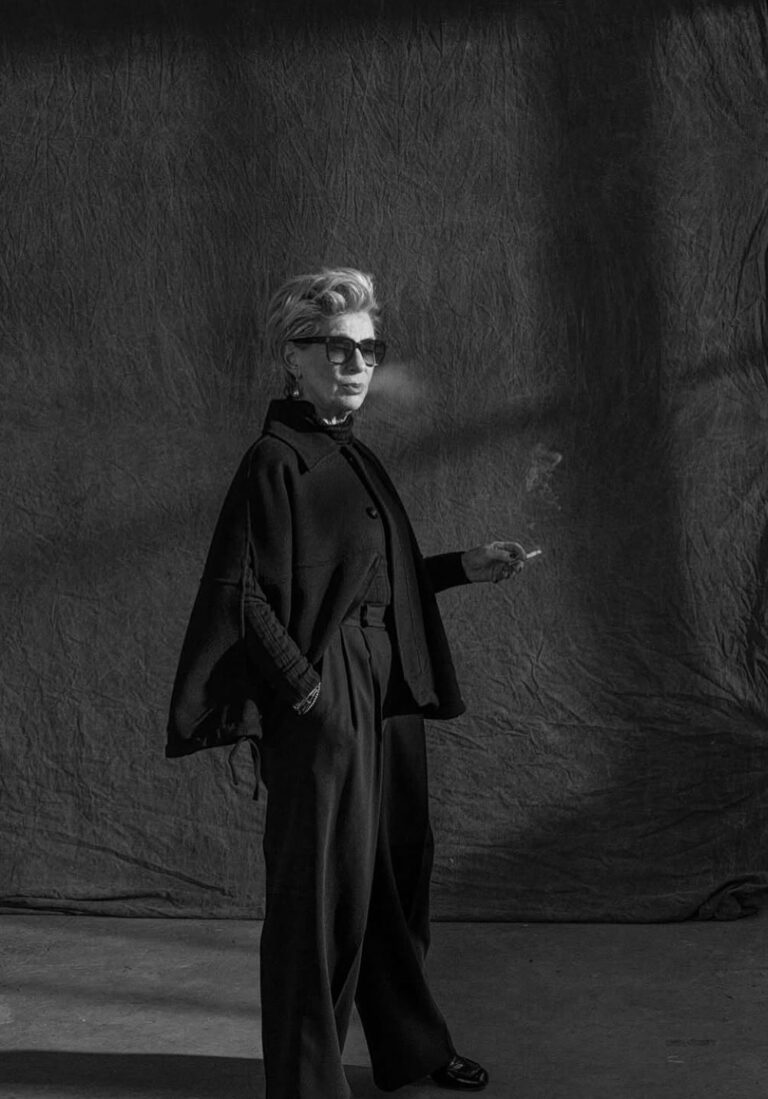
Kiki Niesten · Stokstraatkwartier · high fashion · international designers
A fashion shop can become an address; Kiki Niesten became a reason to come to Maastricht. Since 1979 she has been building her view of international womenswear on the Stokstraat. The business bears her name and her preferences. That personal authorship is recognisable even among the big fashion houses: Kiki’s selection is the starting point of the shop at Stokstraat 28-32.
Prada and Miu Miu appear on the list of brands alongside Alaïa, The Row, Dries Van Noten and Jil Sander. Khaite, Toteme, Lisa Yang, Extreme Cashmere and Fforme are also part of the range. The company includes established houses and younger names, with widely differing ideas about volume, colour and everyday wear. As a result, the shop shows several developments in international womenswear in one place. Kiki’s long relationship with the trade takes on fresh substance every season through the designers she brings together.
In 2025 the main shop underwent a thorough renovation led by Maurice Mentjens. The ceilings were removed to create more height, and the double entrance made way for a single doorway. A counter of brown Emperador marble with white veins became an eye-catcher. Belgian bluestone and wenge wood give the interior its own palette of materials. The renewed space became warmer and more accessible, without the shop having to get any bigger.
Mentjens had known Kiki’s world for a long time. In 2006 he designed Kiki2; ten years later he gave that same shop, by then called Kiki’s Stocksale, a light interior with dots, mirrors and long lines. That project showed how a narrow building can take on a different scale through its presentation. The collaboration therefore spans several chapters and several shop concepts. The 2025 renovation of the main shop builds on a longer conversation between entrepreneur and designer. The Stocksale project received a German Design Award in Gold and an Iconic Award in 2017, which brought the shop’s architecture international recognition too.
An earlier collaboration also remained visible. Furniture from the Herman Zeekaf period was given a place again; the fitting rooms kept the fabric he had chosen. That gives the shop a memory. Kiki also guards her independence from the fashion houses: the shop gets its coherence from her own style. An international list of brands can thus exist within an interior that remains a distinctly Maastricht and personal address, with elements that have long belonged to the business.
For visitors interested in both fashion and shop architecture, Kiki Niesten therefore offers two equally good reasons to visit the Stokstraat. The collection shows her view of what designers are making now; the space tells how she has worked with other makers over the years. Simply browsing is also very much part of her idea of accessibility. In that sense the shop is both a selection and a personal archive: new clothes appear among choices that have been linked to Kiki for much longer.
Queen of fashion.